About HCMUD 151

This author has not yet filled in any details.
So far HCMUD 151 has created 5 blog entries.

W. Lake Houston Sanitary Sewer Rehab Description

Harris County Municipal Utility District No. 132 (“MUD132”) in conjunction with Harris County Municipal Utility District No. 151 (“MUD151”) has engaged a contractor to rehabilitate approximately 4,900 linear feet of 30” gravity sanitary sewer lines along W. Lake Houston Parkway between Kings Parkway and FM1960.  The project overlaps both MUD132 and MUD151.  The purpose of the project is to extend the functional life of the sanitary sewer lines, to help prevent failure or collapse of the sanitary sewer lines, and to help minimize the need to replace the lines in the future.

The existing 30” sanitary sewer line is concrete pipe and was constructed along the west side of the roadway in the 1980s.  The pipe will be rehabilitated with a Cured-in-Place Pipe (CIPP) liner, which is a trenchless method of rehabilitation in which the contractor will access the pipe through the existing manholes.  The project will also include rehabilitation of the existing sanitary sewer manholes along this stretch of W. Lake Houston Parkway, as well as bypass pumping of the sanitary sewer flows during the time the sanitary sewer lines and manholes are being rehabilitated.

The project will not involve open-cut construction or installation of any new sanitary sewer pipe.  However, in order to access the manholes as part the new liner installation, the contractor will need to shut down the outside lane of southbound traffic on W. Lake Houston Parkway in the vicinity of the manholes being accessed.

The contractor is scheduled to mobilize to begin installation of the bypass pumping in mid-late June, with rehabilitation of the sanitary sewer lines starting in early July.  The project is scheduled for completion in early September.  The contractor will begin work at the north end of the project (south of Kings Park Way) and will finish at the south end of the project (FM1960).

The total amount of the construction contract is $2,442,042.50.  Per the terms of the agreement between the MUDs, MUD151’s share of the costs is 60.7% and HCMUD132’s share of the costs is 39.3%.  The construction project is being managed by MUD132 per the terms of the agreement.

MUD132’s board of directors has taken steps to expedite and improve the construction process through such actions as extensive vetting of potential contractors, establishment of the position of an Owner’s Rep to track construction progress and handle resident interaction, and utilization of economic incentives and disincentives in the construction contract to encourage timely completion of the project.

A few residents in MUD 151 have sanitary sewer laterals that tie directly into the 30-inch main.  Those will need to be monitored with the cleanouts open and accessible to the contractor during the CIPP process.  Those residents will notified with instructions on door tags and/or in person by the contractor.

Project Specifics

Contractor:

  • Insituform Technologies, LLC
  • Kevin Gabrysch (Project Manager) – 281-932-2705
  • kgabrysch@azuria.com
  • Marcus Beasley – 832-206-6211

Owner’s Representative:

District Engineer:

District Operator:

  • Inframark – 281-579-4500

Cost and Funding:

  • MUD132’s costs for the project are being funded from sales tax revenue generated by the Strategic Partnership Agreement with the City of Houston signed in 2005 to prevent annexation.  There will be no increase in the MUD132 ad valorem property tax rate to fund the project. MUD151’s costs for the project are being funded with Operations & Maintenance funds from existing property tax revenues. There will be no increase in the MUD151’s ad valorem property tax rate for this project.
W. Lake Houston Sanitary Sewer Rehab Description2026-07-10T20:23:52+00:00

Winterize Your Home

With freezing temperatures right around the corner, it’s a good time to refresh ourselves on precautionary measures for drops in temperature and cold weather.

The Four P’s to Prepare your Home this Winter:

  • People
  • Pets
  • Pipes
  • Plants

People

  • Avoid going outside if it is not necessary. If you do, make sure you layer up from head to toe.
  • To keep you and your family safe, it is imperative your home is warm.
  • Make sure your heat is set to an appropriate temperature to make your entire home comfortable. Remember, heat rises so if you sleep upstairs, your room may be warmer than rooms downstairs.
  • If you use a fireplace, make sure you have a screen to catch any embers that might escape or a rolling log.
  • Never use your stove or oven to heat your home.
  • If you smell smoke or see flames, call 9-1-1 immediately.

Pets

  • While protecting your family, it is imperative to protect your pets as well.
  • Pets, like humans, are vulnerable to cold temperatures. If not taken care of properly, they can succumb to frostbite and even hypothermia.
  • If you have a dog that typically lives outdoors, consider letting them inside when temperatures drop to freezing. While their fur does help to keep them warm, it provides little help in freezing temperatures.
  • If you absolutely cannot bring them inside, make sure they have a warm shelter, plenty of food and fresh water so it does not freeze.
  • If your pet looks like it has any symptoms resembling frostbite or hypothermia, call your vet.

Pipes

  • Turn off the sprinkler system shut-off valve. Most residential devices have two shut-off valves. These are typically covered in blue on the valve handles and located before and after the sprinkler system backflow device. A diagram is shown below.
  • Release the water pressure from the bleeder valves. The bleeder valves are usually located under the top of the backflow device. If the water does not stop flowing you may have not shut the valves off completely.
  • Leave the smaller bleeder valve open, this will let any remaining water in the line expand without breaking the device. Insulate your backflow device. Most hardware/home services stores carry backflow insulation supplies.
  • Make sure to cover all your exposed pipes with a cover. You can also cover your pipes with towels, duct tape or another adhesive strip as long as they are wrapped tightly.
  • You can also open up the cabinets to let warm air circulate throughout your home. Just make sure any harmful chemicals are out of reach for children and pets.

Plants

  • When cold weather hits, it’s a good idea to bring in all of your outdoor plants.
  • If you can’t bring in the plant, cover it with a blanket to make sure they do not die.

Other Tips

  • Don’t forget to make sure your car is okay for the freezing temperatures. Check your anti-freeze and your batteries. Also make sure to check your tire pressure and the tread.
  • Speaking of cars, make sure when you are on the road that you are mindful parts of the roads may be frozen, particularly bridges. Do not speed and never slam on the brakes.
  • Make sure if you use a generator, it is outdoors. Do not use a generator inside, including in your garage.
Winterize Your Home2026-01-23T23:53:44+00:00

Flushing – Not Just For Toilets!

Ever wondered why a fire hydrant might be open with water flowing down the street? It’s usually not an emergency — it’s part of essential maintenance to keep your water safe and clean. Water districts flush lines for several important reasons, including improving water quality and maintaining infrastructure.

Flushing – Not Just For Toilets!2025-10-28T20:49:45+00:00

2022 District Tax Rate

On October 11, 2022, the Board of Directors adopted a total District tax rate of $.3040 which consists of $.3040 for operations and maintenance and no levy for debt service.

2022 District Tax Rate2024-01-15T03:26:51+00:00

Hurricane Preparedness 2022

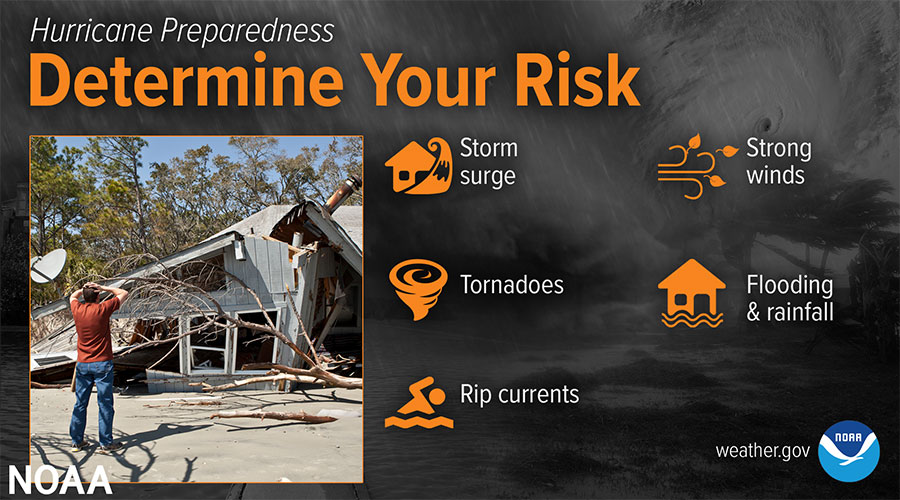
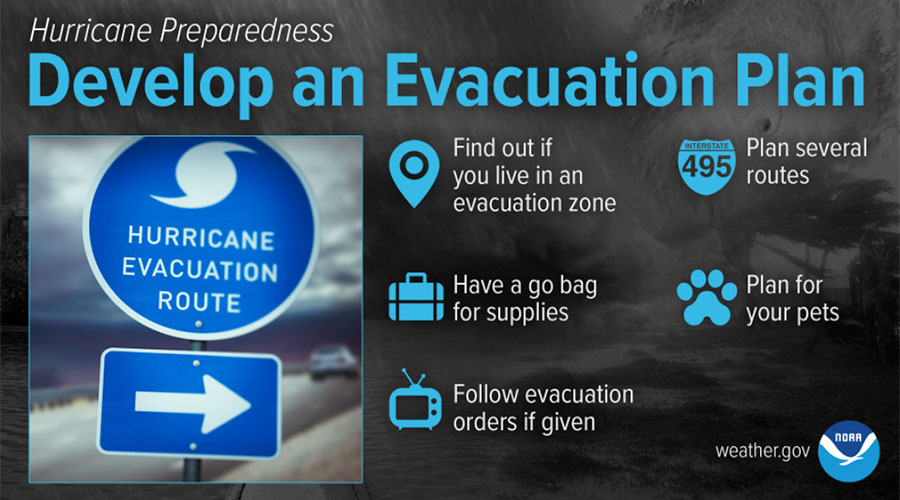
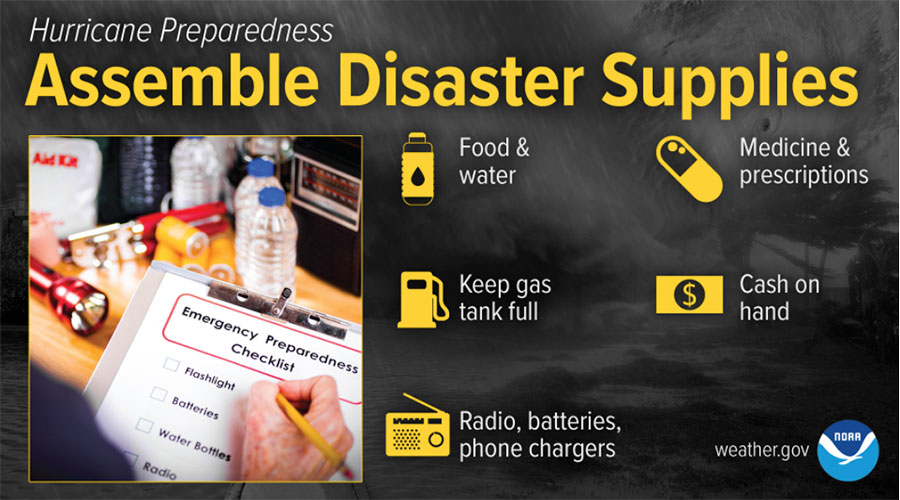
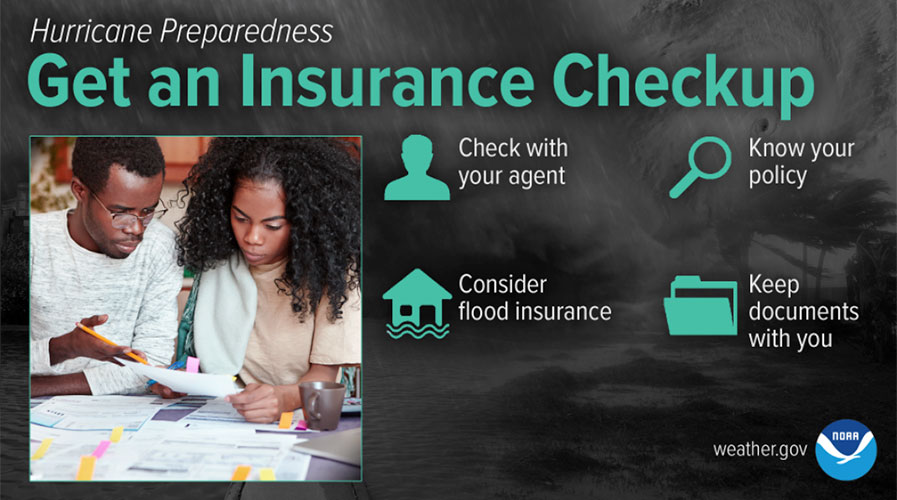
Be ready for hurricane season. Today you can determine your personal hurricane risk, find out if you live in a hurricane evacuation zone, and review/update insurance policies. You can also make a list of items to replenish hurricane emergency supplies and start thinking about how you will prepare your home for the coming hurricane season. If you live in hurricane-prone areas, you are encouraged to complete these simple preparations before hurricane season begins on June 1.


Find out today what types of wind and water hazards could happen where you live, and then start preparing how to handle them. Hurricanes are not just a coastal problem. impacts from wind and water can be felt hundreds of miles inland, and significant impacts can occur regardless of the storm’s strength. Know if you live in an area prone to flooding and if you’re safe to remain in your home.


Find out if you live in a hurricane evacuation zone. You may also need to leave if you live in a flood prone area or in a mobile home outside a hurricane evacuation zone. Now is the time to begin planning where you would go and how you would get there.

You do not need to travel hundreds of miles. Your destination could be a friend or relative who lives in a well built home outside flood prone areas. Remember, your safest place may be to remain home. Be sure to account for your pets in your plan.

As hurricane season approaches, listen to local officials on questions related to how you may need to adjust any evacuation plans based on the latest health and safety guidelines from the CDC and your local officials.


Whether you’re evacuating or sheltering-in-place, you’re going to need supplies not just to get through the storm but for the potentially lengthy and unpleasant aftermath. Have enough non-perishable food, water and medicine to last each person in your family a minimum of 3 days (store a longer than 3-day supply of water, if possible). Electricity and water could be out for at least that long. You’ll need extra cash, a battery-powered radio and flashlights. You may need a portable crank or solar-powered USB charger for your cell phones.

If you need to go to a public shelter, follow health guidelines from your local officials and the CDC.


Call your insurance company or agent and ask for an insurance check-up to make sure you have enough insurance to repair or even replace your home and/or belongings. Remember, home and renters insurance doesn’t cover flooding, so you’ll need a separate policy for it.

Flood insurance is available through your company, agent, or the National Flood Insurance Program at floodsmart.gov. Act now, as flood insurance requires a 30-day waiting period.


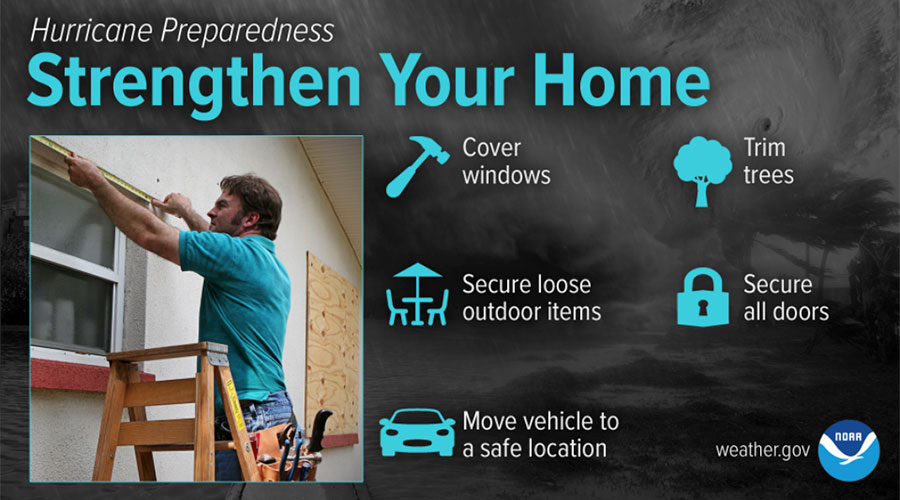
Whether you’re evacuating, or planning to ride out the storm in your home, make sure it is in good repair and up to local hurricane building code specifications to withstand wind impacts. Many retrofits are not as costly or time consuming as you may think.

Have the proper plywood, steel or aluminum panels to board up the windows and doors. Remember, the garage door is the most vulnerable part of the home, so it must be able to withstand the winds.

If you’re a renter, work with your landlord now to prepare your home for a storm.


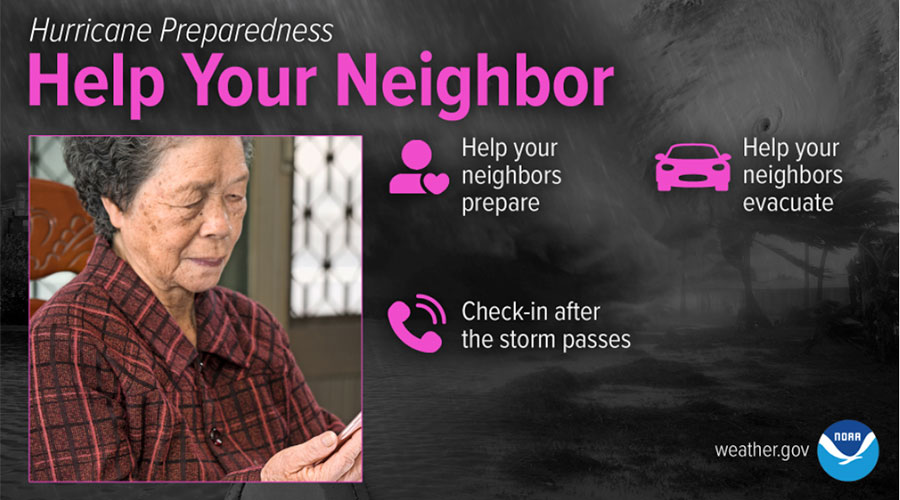
Many people rely on their neighbors before and after a disaster, and there are many ways you can help them. Learn about all the different actions you and your neighbors can take to prepare and recover from the hazards associated with hurricanes.

Start the conversation now with these Neighbor Helping Neighbor strategies but remember you may need to adjust your preparedness plans based on the latest health and safety guidelines from the CDC and your local officials.


The time to prepare for a hurricane is before the season begins, when you have the time and are not under pressure. If you wait until a hurricane is on your doorstep, the odds are that you will be under duress and will make the wrong decisions.

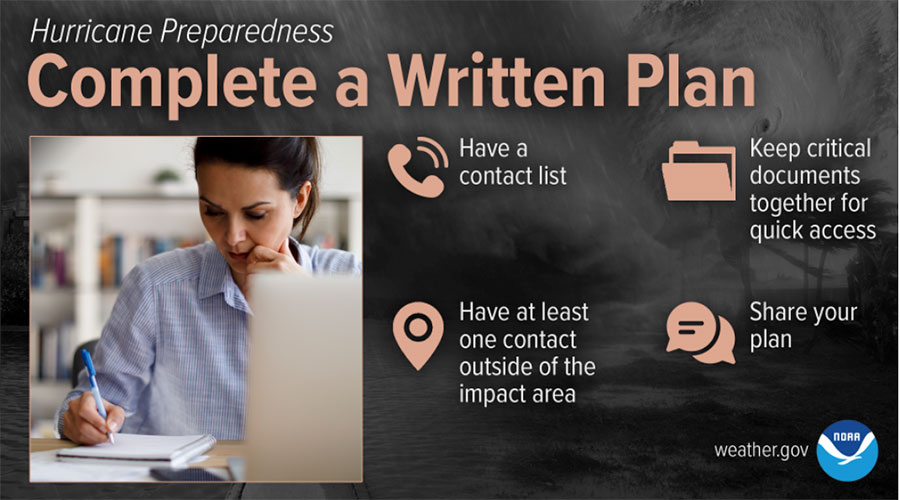
Take the time now to write down your hurricane plan. Know who issues evacuation orders for your area, determine locations on where you will ride out the storm, and start to get your supplies now. Being prepared before a hurricane threatens makes you resilient to the hurricane impacts of wind and water. It will mean the difference between being a hurricane victim or a hurricane survivor.

Hurricane Preparedness 20222024-01-15T03:27:01+00:00
Go to Top